
Again, Heights & Scale in the Residential District
It's the Details that are Important to Prevent Surprises
Brief
-
The next scheduled Planning Commission meeting is on Thursday, April 16th, at 5:30 pm. Check here for the agenda when available: Zoom Meeting, You Tube
-
Members of the community raised concerns about height definitions last fall. The Planning Commission deferred discussion. The original concerns remain unresolved.
A Necessary Review: Not an Endless Process
On March 16, 2026, Lynée Wells, AICP, issued a detailed memorandum to We Love Harbor Springs, the community, and the Planning Commission addressing building heights, grade definitions, measurement standards, and her areas of concern within the current zoning language.
Lynée Wells was retained as a consultant by We Love Harbor Springs in July 2025 because zoning is highly technical. Clear, precise language is not optional; it is essential to ensure consistent interpretation, fair application, and protection of community character over time.
Her review of height is not new. Concerns about height, grade and scale have been raised since August 2025. At the December 2025 Planning Commission meeting, Commissioner Chip Everest formally requested that Planned Developments and height standards be revisited in 2026 to allow for further public understanding and input. That request set the expectation that additional analysis and feedback would follow.
At the March meeting, when height was again on the agenda, Planning Commissioner Kenny Stewart asked: “When is this going to stop? When are we going to stop getting letters from Lynée Wells?” He does ask a good question*.* Zoning is complex and often misunderstood without technical guidance. In matters like this, relying on a professional zoning consultant is not excessive, it is a disciplined and appropriate way to ensure clarity and sound decision-making.
The answer is straightforward:
It stops when definitions of height, grade, and measurement are clear, objective, and enforceable. The zoning code was fully rewritten, an effort that brings improvements, but can also introduce unintended gaps or inconsistencies that need to be resolved.
It stops when the code reflects the community’s intent and produces consistent outcomes, not varying interpretations. Ambiguity, even when unintentional, leads to confusion, uneven application, and in some cases, even legal challenges.
A Simple Example
If “grade” is not clearly defined, two builders on similar lots could measure height differently—one from natural grade, another from a raised or altered base. On paper, both may appear compliant. In reality, one structure could be meaningfully taller than intended, altering neighborhood scale and character.
For example, if grade is measured inconsistently, a home could be approved as a ‘two-story’ structure while effectively functioning as three stories from the street view, resulting in a building that exceeds the scale neighbors reasonably expect.
This is not theoretical, this is exactly how unclear language produces inconsistent results.
What We Are Asking
To eliminate remaining uncertainty, for Planning Commissioners and for community members who continue to follow this closely, we requested that Lynée Wells provide one more memo of additional examples, including visual illustrations (see April 2 letter).
We hope that Beckett & Raeder, as the City’s planning professionals, also would review these findings and assist the Planning Commission in reaching a clear and defensible decision. This is standard practice. Peer review strengthens outcomes and helps ensure the final code performs as intended.
Lynée Wells’ memo identifies remaining gaps—areas where ambiguity can lead to unintended results. Addressing these issues is not prolonging the process; it is completing it responsibly.
The Planning Commission has now had time to review these concerns, and additional professional perspectives from local architects have been sought to support a well-rounded outcome. These professionals have also emphasized the need for clarity.
Lynée Wells’ guidance reflects experience, she has seen how unclear language in other communities leads to inconsistent interpretations and unintended results. Harbor Springs should be eager to adopt best practices.
Why This Meeting Matters
While adjustments are always possible in the future, which may be their argument, we believe it is both prudent and responsible to address these issues now. At this point, the responsibility is shared: resolve ambiguities, align the code with its intended purpose, and adopt clear, consistent, and enforceable standards.
A well-crafted code should be both protective and practical—clear enough to prevent unintended outcomes, and flexible enough to support thoughtful, creative and high-quality results.
Resolving these details now ensures that Harbor Springs is guided by standards that are not only enforceable but enduring.
That is how Harbor Springs is protected—by getting it right.
Submitted by Karin Offield
The March 16th Letter You May Have Read
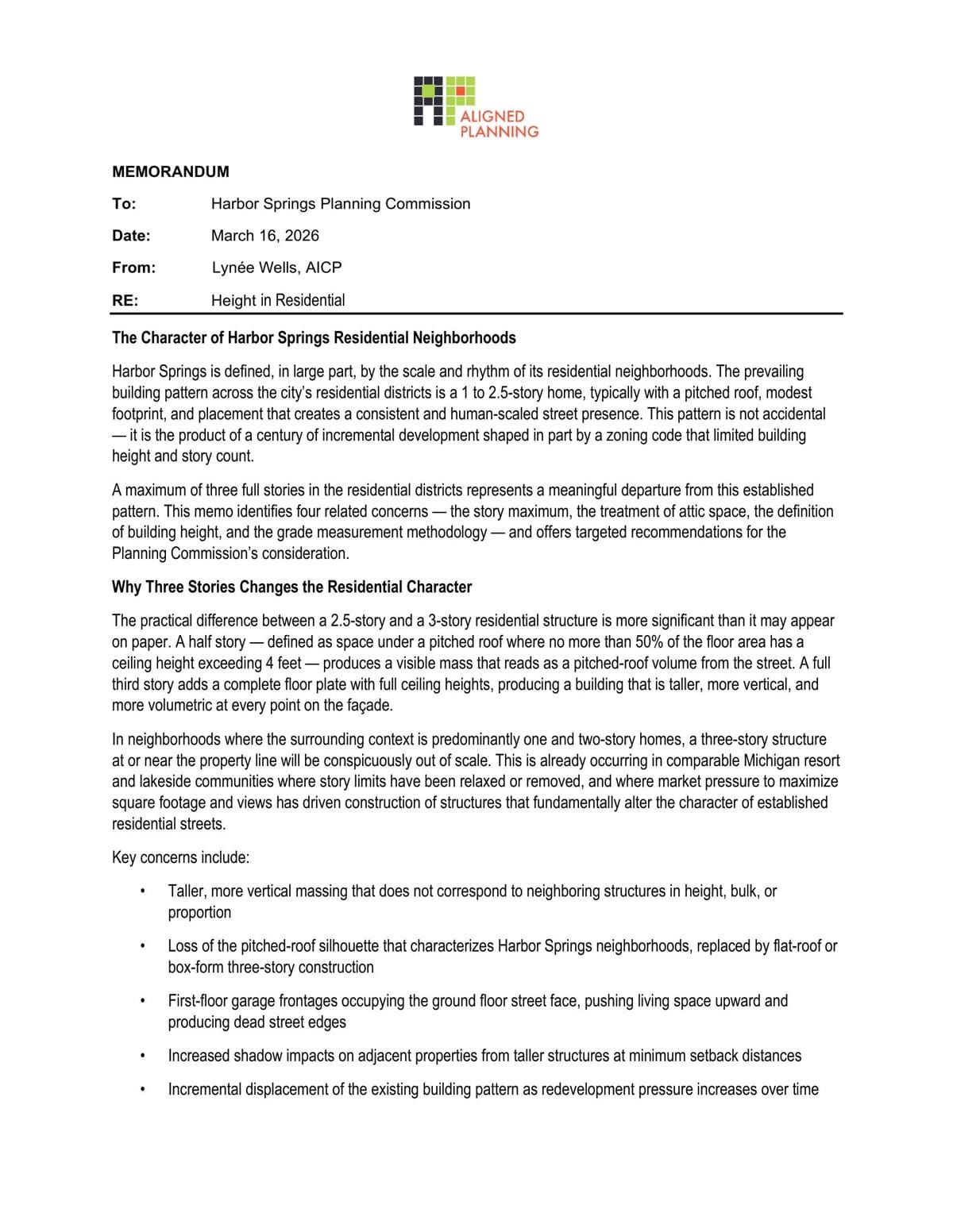
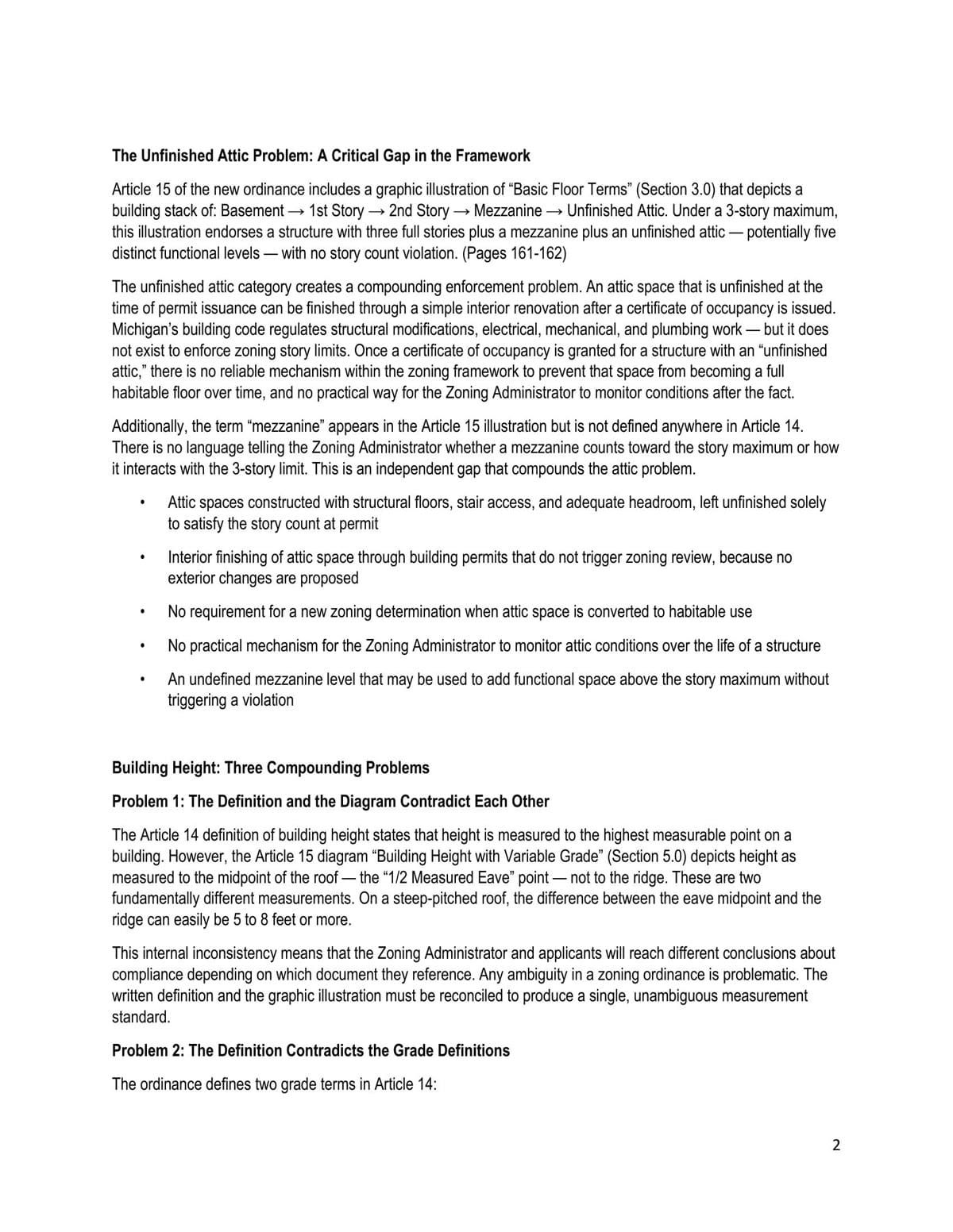
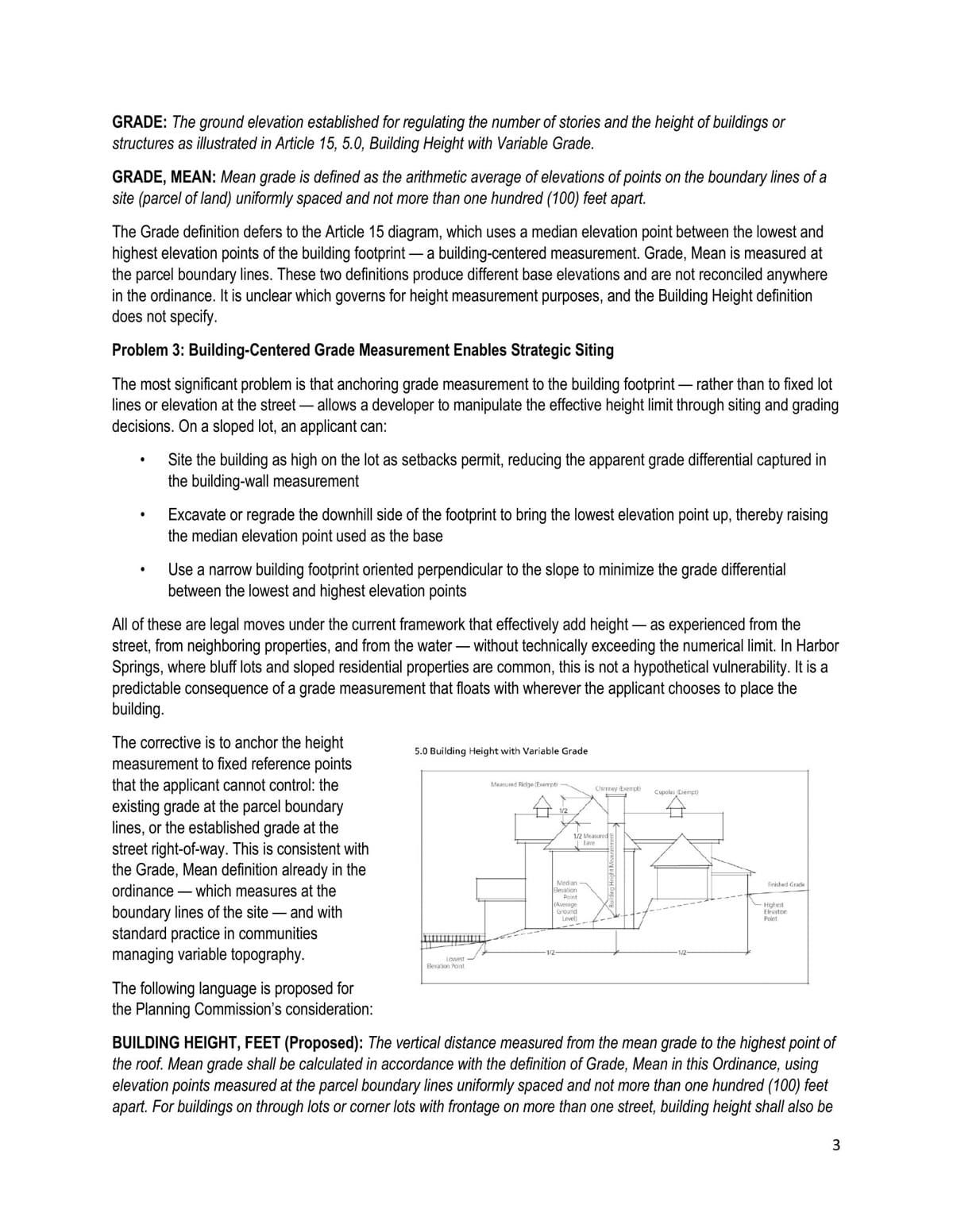
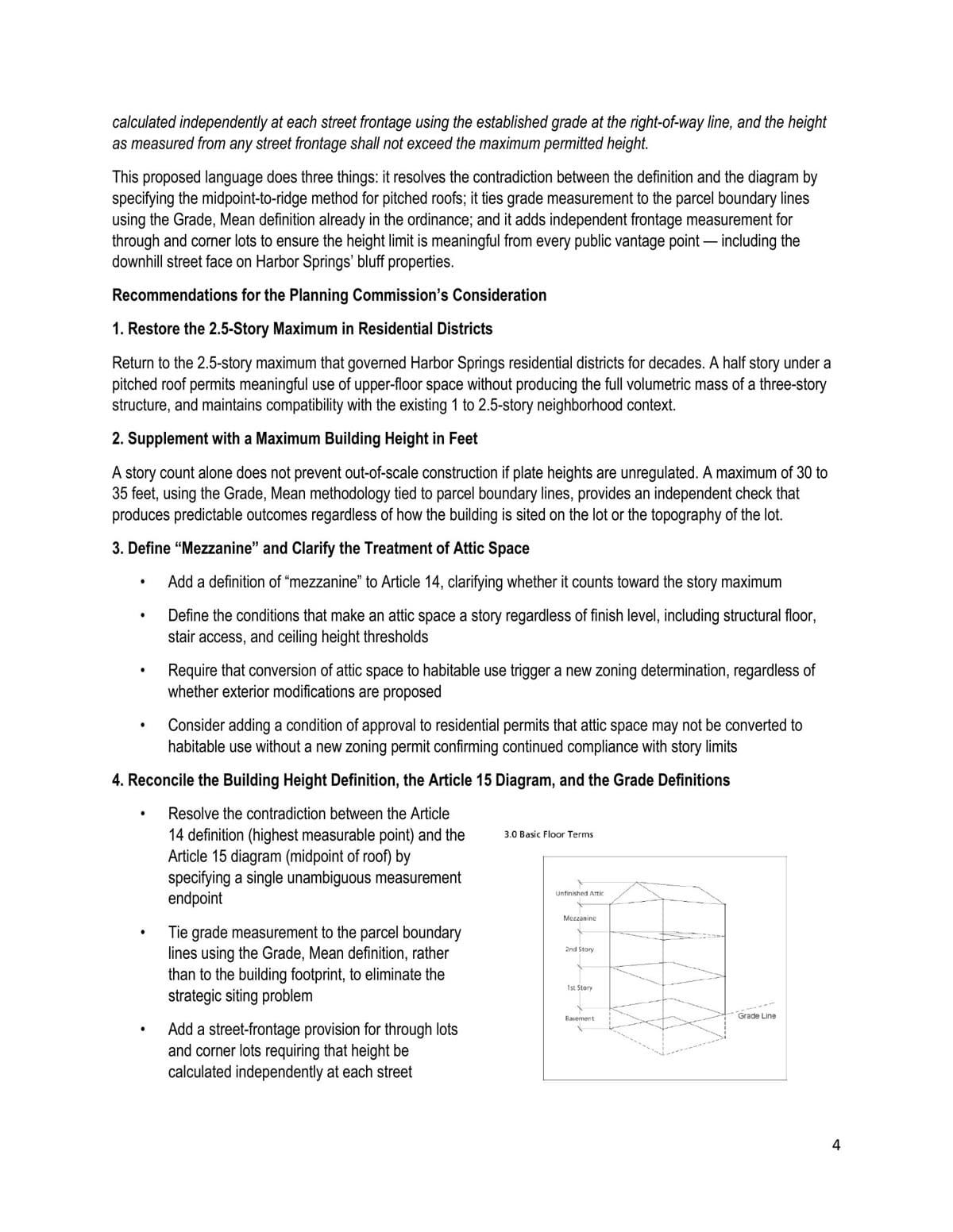
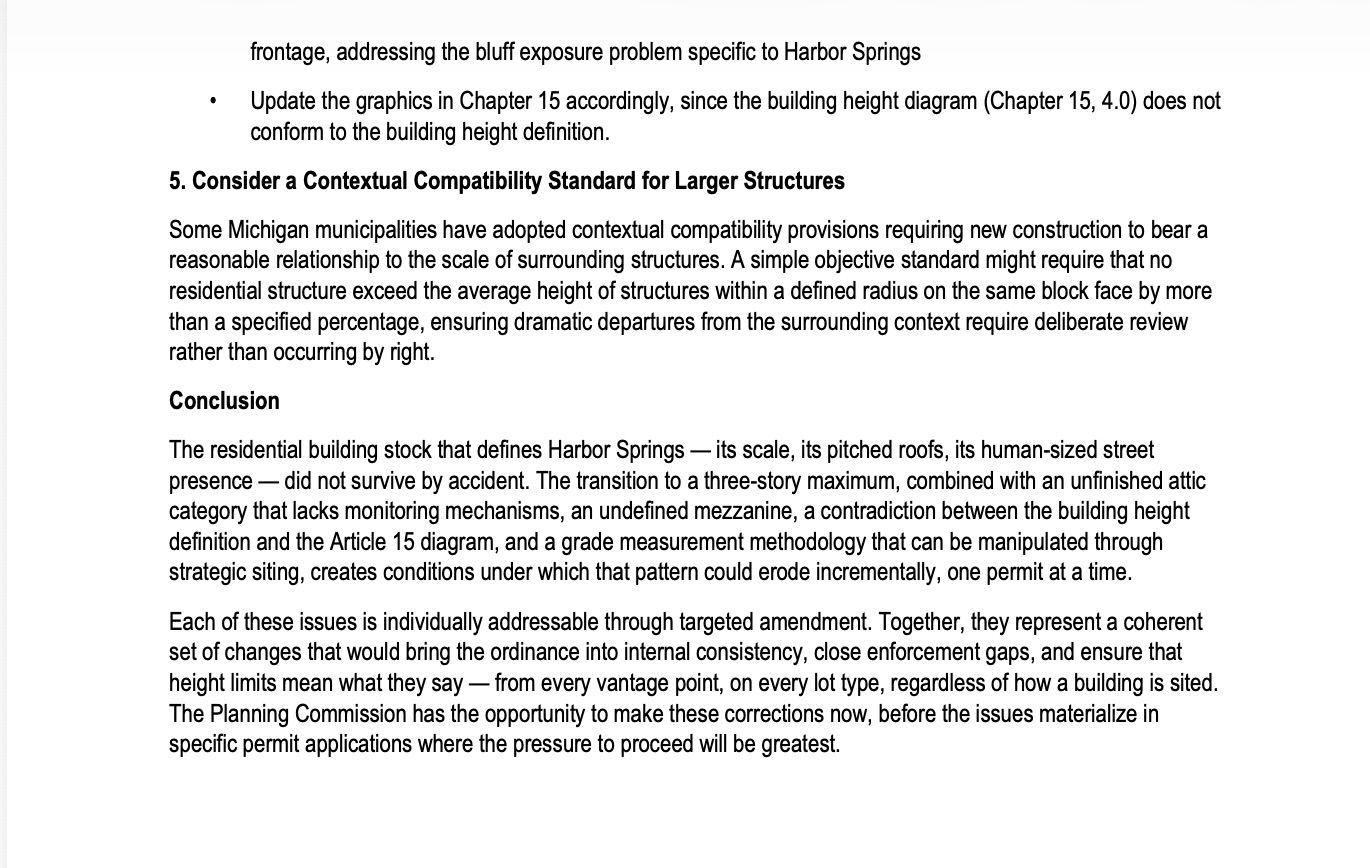
We still were not completely clear, so we asked Lynee for one more letter, with more illustrations.
The April 2, 2026 Letter
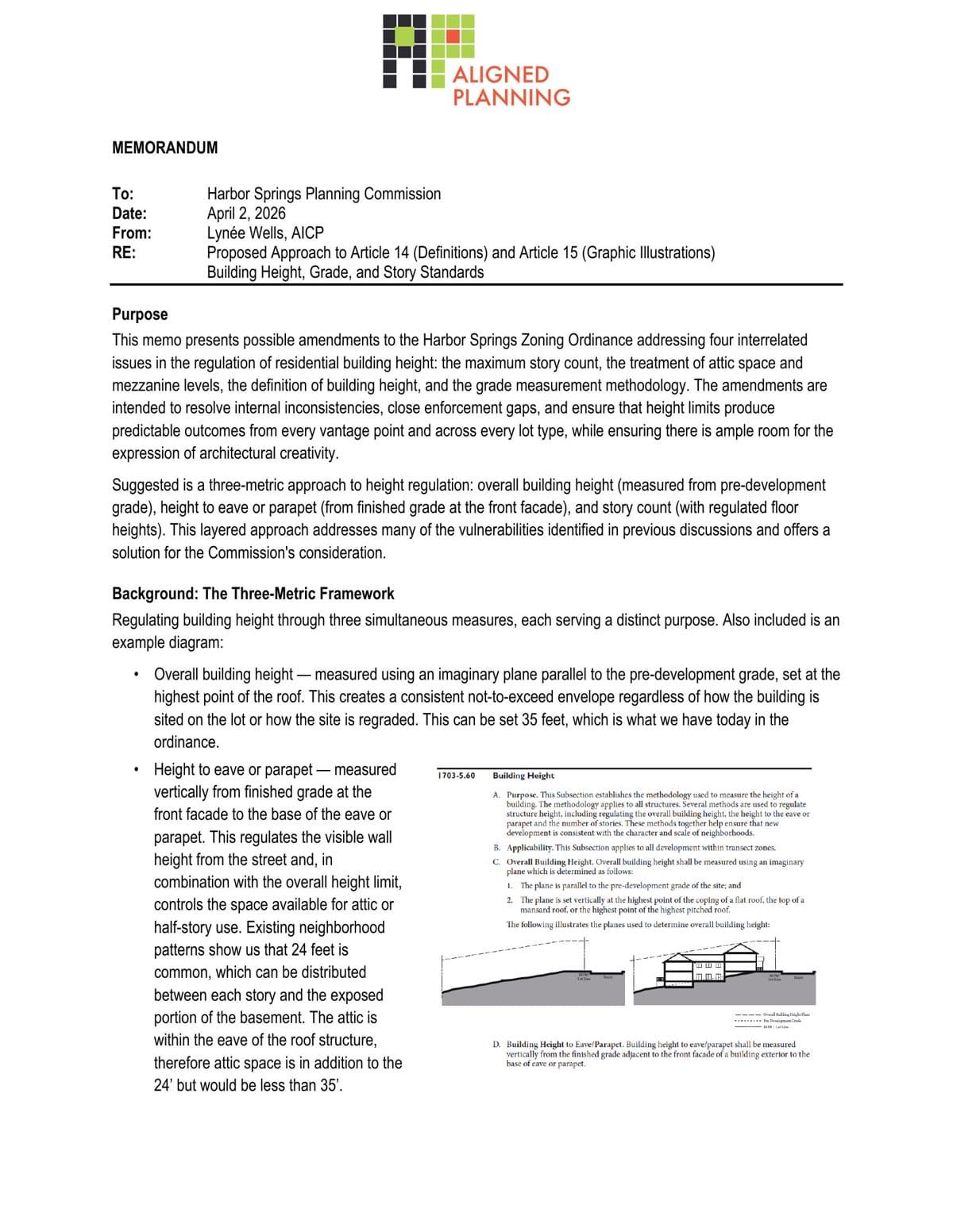
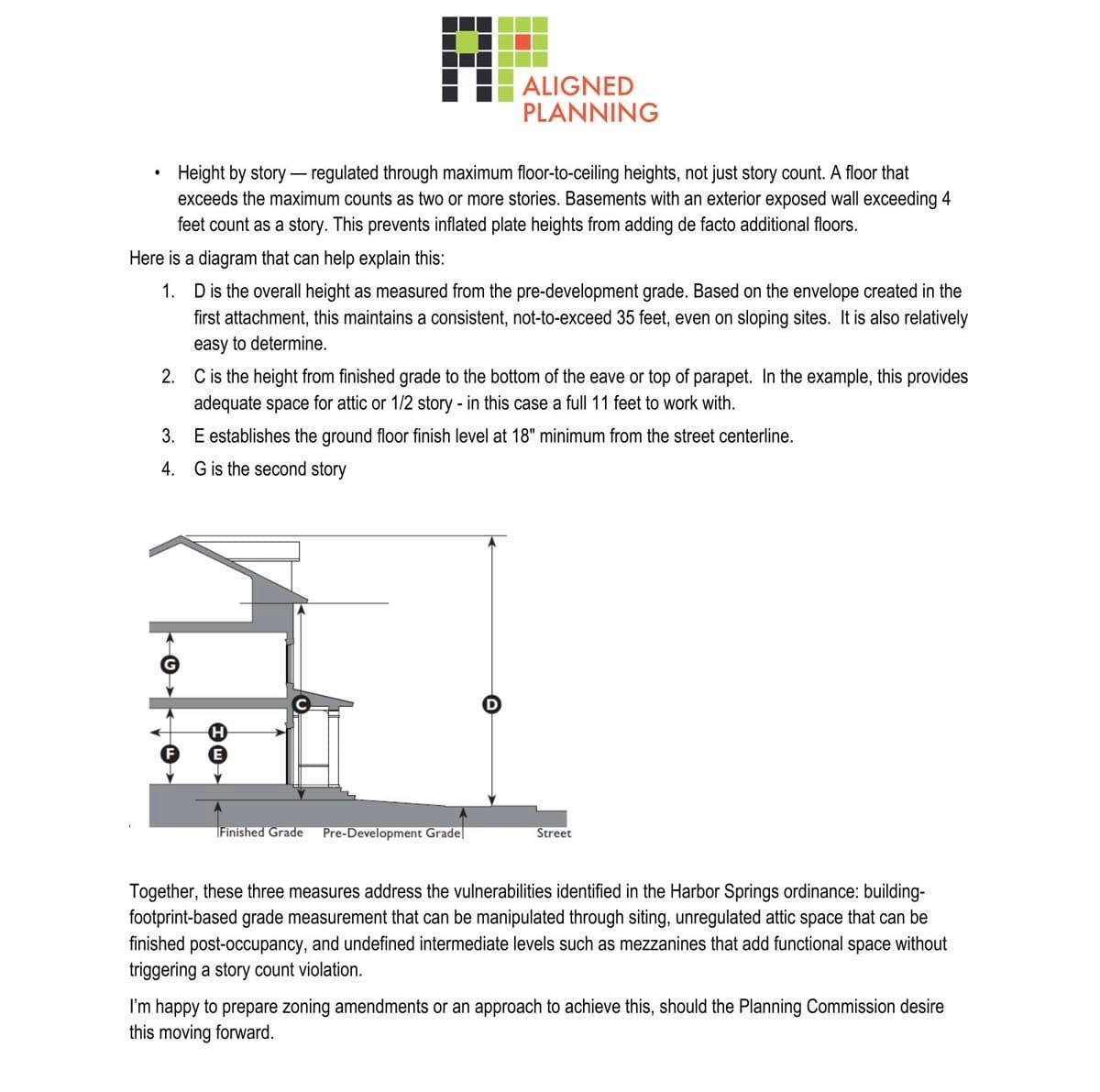
We welcome your feedback at weloveharborsprings.com
Thank you to the community for taking the time to review. Thank you to the Planning Commissioners for your review to make sure we have it right.