
DDA Streetscape Meeting: July 8 Recap
Is Downtown Harbor Springs set for a makeover
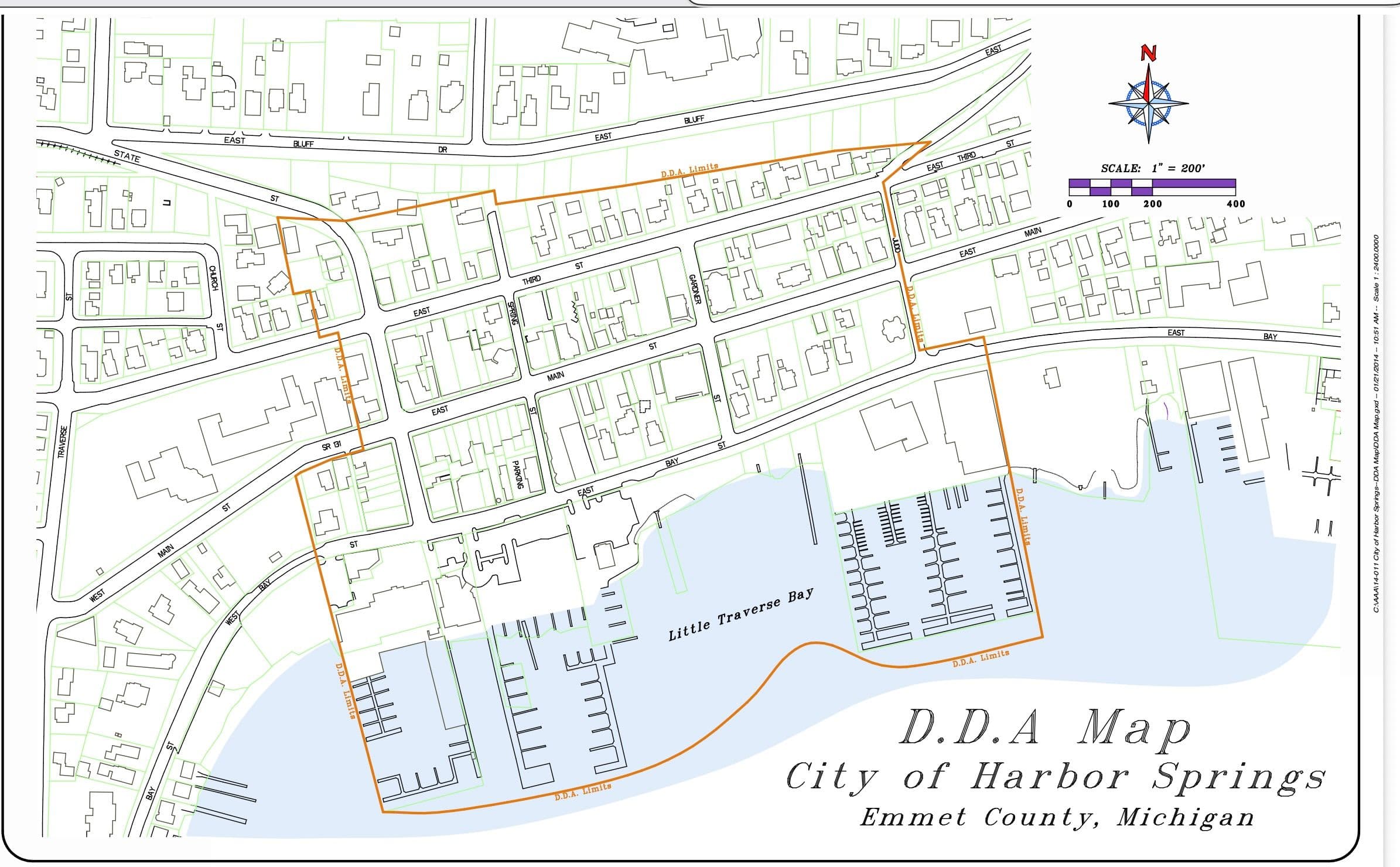
At the July 8 DDA streetscape meeting, residents did not just say “no” to change. They raised specific, practical concerns about what downtown Harbor Springs actually needs. The survey was taken by 160 people - just over 100 of them full-time. 12 Surveys were turned in during the first Open House. Feedback is helpful, but with 1,200 year-round residents and 15,000 peak summertime visitors, 160 is not statistically relevant.
We might suggest not changing anything major unless DDA can get substantial affirmative agreement from the community.
Asked question #1: Who is in charge of tracking the revenue of the town for the TIF monies?
Answer: What the DDA answer gave instead was a process answer, not a revenue-tracking answer:
• The DDA Director Beckie Goodman said the DDA plan says the DDA will “analyze economic changes and growth.” She said the DDA may approve a plan or not. Then the plan goes to the Planning Commission for review. City Council gives final approval. She also said the DDA cannot spend money on the plan unless City Council approves it. She noted City Council already approved the 2026 DDA budget, including funding for the streetscape plan.
The public asked an accountability question: who tracks the TIF money? The answer shifted to the streetscape plan's approval process. No specific person or office was named responsible for tracking, reporting, or explaining TIF revenue.
Unanswered Accountability Question : ‘We can’t know how many people will sit on a bench’ is not an accountability answer. The community is asking more serious questions.
Residents from across Harbor Springs showed up — from different neighborhoods, different viewpoints, and different concerns. It’s our town; people need to speak up and attend these meetings, the DDA has the power to change the town without your input
More than 20 residents came in person, and something important happened: for the first time in this streetscape discussion, the community began to sound aligned.
People were not against fixing things.
They were asking for the right fixes: protect the character of Harbor Springs, repair what truly needs repair, be careful with public money, preserve working streets like Bay Street, and do not mistake a consultant’s plan for a community mandate. Just because a consultant presents an idea does not mean the community has asked for it or agreed to it.
That is real consensus and starting points.
The message was simple: fix what is broken, prove what is needed, and do not redesign Harbor Springs into somewhere else.
Here are the fixes we heard from public comments:
Dan Carter’s fixes
-
Protect safe pedestrian crossings.
-
Do not narrow streets without accounting for boats, trailers, SUVs, and larger local vehicles.
-
Keep marina and seasonal traffic realities front and center.
-
Look at lower-cost visibility fixes before major construction.
-
Be cautious about removing or restricting parking near corners without public buy-in.
-
Question whether dark-sky lighting rules make sense the same way downtown as they do in residential or waterfront areas.
Tim Patton’s fixes
- Solve the bike-clutter problem without redesigning all of Main Street.
John McHenry’s fixes.
-
Define what the “downtown district” actually includes. What are the boundaries?
-
Treat Bay Street differently from Main Street because it has the lake, businesses, one-way traffic, parking, bikes, walkers, and strollers all competing for space.
-
Do not assume every downtown street needs the same streetscape treatment.
-
Recognize that narrow, slow streets already shape driver behavior.
-
Fix problem spots without turning Bay Street into something it is not.
Bob Thoma’s fixes
-
Protect the working waterfront.
-
Preserve access for marina operations.
-
Account for large boats, equipment, trucks, and deliveries using Bay Street.
-
Prioritize function before beautification.
-
Avoid landscaping or bump-outs that create pinch points for the businesses that rely on that street.
Scott Heston’s fixes
-
Read the survey honestly.
-
Do not spend TIF money just to prove the DDA is “doing something.”
-
Preserve the character people came here for.
-
Make incremental, reversible fixes first.
-
Stewarding TIF money is progress, too, making the important point that the DDA does not have to spend money just to prove it is doing something. If the community wants small fixes and preservation, then saving TIF funds for a more important future need may be the most responsible decision.
Kathleen Serra’s fixes
-
Read the surveys honestly and do not turn minority dissatisfaction into majority demand.
-
Separate “needs improvement” from “requires redesign.”
-
Keep satisfaction numbers in the conversation.
-
Avoid using selective data to justify a pre-chosen plan.
-
Make sure the public sees the full survey results before decisions are framed.
Debbie Pirrung’s fixes
-
Show evidence of the pedestrian safety problem before spending heavily.
-
Ask how many injuries or incidents have actually occurred.
-
Distinguish peak-season crowding from year-round infrastructure need.
-
Use paint and restriping where possible before concrete construction.
-
Clarify whether standards are mandatory, advisory, or legal-risk guidance.
Marinda Miller’s fixes
-
Follow the money before approving the design.
-
Require transparency on consultant influence and possible conflicts.
-
Prove the safety problem before redesigning downtown.
-
Do not over-urbanize Harbor Springs.
-
Protect biking and natural movement on Main Street.
-
Verify whether survey responses reflect residents and taxpayers.
-
Explain how streetscape “improvements” affect TIF revenue.
-
Put basic city needs — streets, sidewalks, plowing, DPW capacity — ahead of unnecessary redesign.
Wendy Reeve’s fixes
-
Do not narrow downtown streets.
-
Design for winter and shoulder seasons, not just July.
-
Protect downtown parking, especially close parking for businesses in cold months.
-
Do not prioritize pedestrian space in a way that hurts merchants or access.
-
Be realistic about dark-sky lighting downtown when nearby ski hills create major winter light.
-
Avoid bump-outs that complicate snowplowing and may not actually prevent accidents.
-
Preserve required business access and parking behind buildings, including Spring Street / Bay Street circulation.
-
Keep Main Street simple: flowers and background trees, not overdesigned landscaping.
-
If the DDA wants to make a real improvement for residents and merchants, find a way to heat or better clear the sidewalks.
Dana Mulder’s fixes
-
Get more public input before the DDA makes decisions.
-
Recognize that Harbor Springs does not need a lot of change.
-
Pull the streetscape process back from becoming too big or too complicated.
-
Remember that the original issue was modest, things like repainting lamp posts, not a full downtown redesign.
-
Give City Council the DDA’s response, but keep that response grounded in community feedback.
Maggie Lacy’s fixes
-
Use the visitor data to plan for the full year, not just July.
-
Focus on strengthening the shoulder seasons so downtown businesses can thrive beyond summer.
-
Remember the history: past street widening already took away green space, so be careful before changing streets again.
-
Fix the real sidewalk problem by addressing tree roots, heaving, and infrastructure under the sidewalks.
-
Align and improve downtown trees so the streetscape feels consistent block to block.
-
Consider bringing flowers back to Main Street instead of adding landscaping that may collect trash or require more maintenance.
-
Respect the green spaces that neighborhoods already maintain and care for.
-
Improve winter sidewalk conditions, either through better snow removal or testing a heated-sidewalk section.
-
Look for practical solutions instead of treating the plan as all-or-nothing.
The DDA’s closing comments:
Welcomed the turnout and noted DDA meetings rarely draw public comment. Said before any decisions are made, the board needs to hear from more residents. Told the room to talk to neighbors and friends, and to contact any DDA member directly. Said she doesn’t think Harbor Springs needs a lot of change, and reminded everyone this started with something small — repainting lamp posts — and grew into a “monster event.”
Urged the board to pull the process back and make sure its input is grounded in what the public is actually saying. Said plainly, “We are listening.” Distilled the meeting’s message as: no radical changes, enhancement, enhance what you have.
Said the DDA doesn’t want to go over the top or make downtown feel like Disneyland, and that was never the intent. Acknowledged the first survey was confusing. Said the master plan is a long-term footprint the city council asked them to produce, and they’re fulfilling that obligation. The takeaway: limited change, slow change, enhancement — “that’s what we want.”
Join the DDA Tuesday, July 14 (8:00-9:00 AM), Friday, July 17 (12:00-1:00 PM), or Monday, July 20 (5:00-6:00 PM) - all sessions at City Hall. These informal sessions are one of your opportunities to tell the DDA what you really think and to learn more about possibilities you may not have considered.
Write to us with your FIXES at weloveharborsprings@gmail.com