
Planning Commission Meets Tonight: Five Things on the Table
Thursday, June 18, 2026 at 5:30 PM, City Hall, 160 Zoll Street. You can also join on Zoom or watch on YouTube (links on the City site).
Please be at City Hall tonight at 5:30. If you can not be in person, watch by Zoom to also comment Zoom Meeting Click Here or via YouTube to view only You Tube Click Here. This is a working meeting, not a public hearing, but public comment opens the agenda. If you care about how downtown grows, show up.
The Big Questions for tonight
-
Can zoning ever really protect the community’s interests, or has the town grown too comfortable delegating that judgment to the Commission?
-
Is it time to stop building for peak-summer tourism and streetscapes? The infrastructure is already here; the real local economy opportunity is the shoulder and off-seasons.
-
Are we neglecting our first duty, to plan ahead for electric, water, and sewer, in favor of debating buildings?
-
If the first project under the rewritten code drew this much opposition, how much of the code itself do we actually trust?
1. What is on the agenda
The published agenda lists four items of business (Planning Commission Agenda, June 18, 2026):
-
289 E Main St. site plan review (the Main/Gardner project)
-
Draft signage ordinance
-
Cobalt Community Research, 2026 Visitor360 foundational report (the 2025 cell-phone traffic study)
-
Potential zoning code revisions
Three of these touch the same question: how much, how tall, and how fast downtown changes. That is why this meeting matters more than a routine June agenda suggests.
2. 289 E Main / Main-Gardner: what the Commission must decide
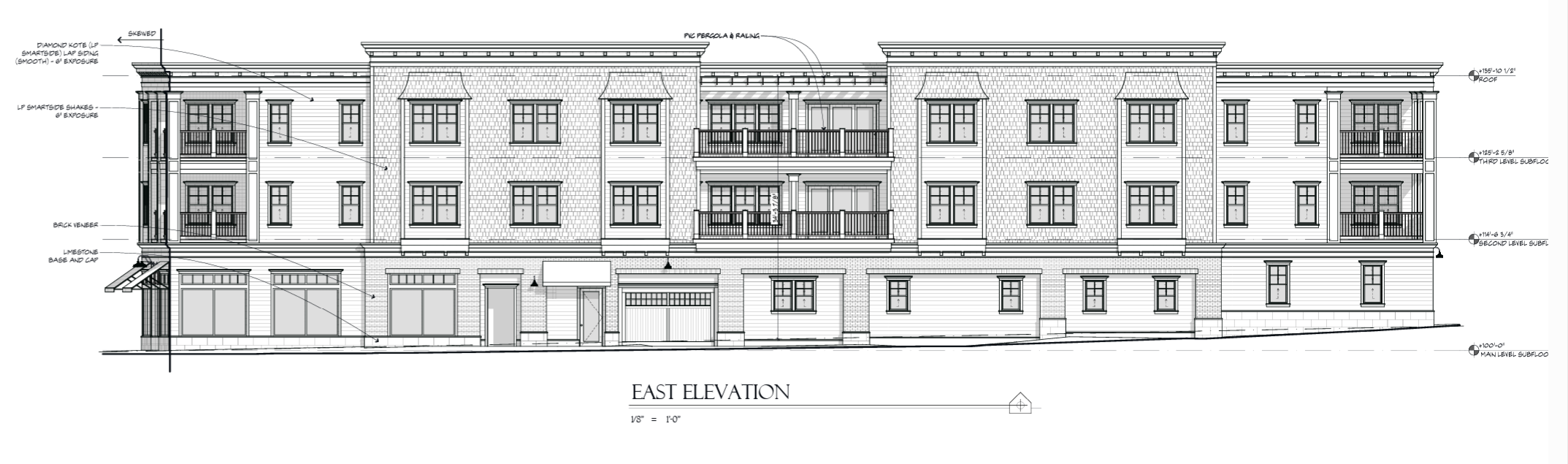
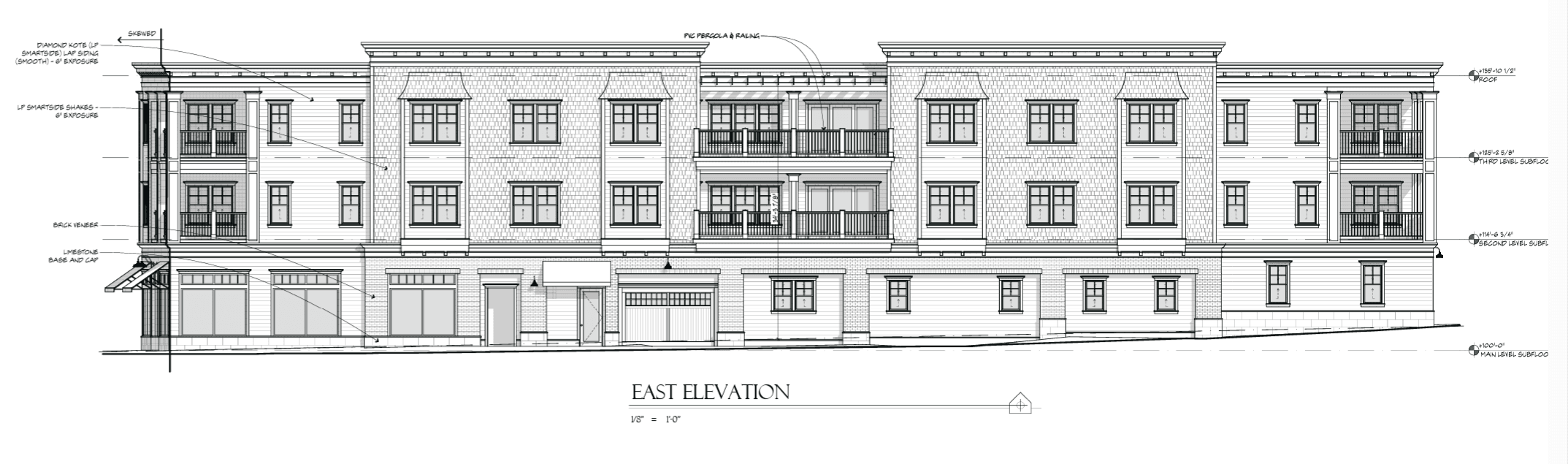
The applicant proposes a three-story, mixed-use building of roughly 13,540 square feet, with ground-floor commercial space, two commercial tenant suites, and upper-story residential condominiums served by internal garage parking (289 E Main site plan, June 18, 2026).
On May 21, the Commission tabled the project after several residents spoke against it and the planner flagged requirements that were not yet satisfied. The revised packet now marks every review item, including building height, curb cuts, clear-vision areas, pedestrian circulation, and garage egress, as “Addressed.” So the decision tonight is narrow and consequential: does the Commission accept the applicant’s claim that every deficiency is resolved and approve the site plan, or does it find gaps that still require changes or conditions?
What we are hearing around town. Opposition to this project appears broad. One resident reports surveying hundreds of residents and finding near-universal opposition, and some residents are weighing whether to seek a “stay” to block the project, accepting the legal cost and complexity as a price worth paying. We have not independently verified the survey, and a site plan that meets the zoning on the books is hard to stop on sentiment alone. That tension, strong public opposition against a plan that may technically comply, is the heart of tonight’s debate.
3. The moratorium: is the zoning rewrite aimed at the right target?
On May 21, the Commission voted to recommend that City Council issue a 90-day moratorium on applications for commercial buildings in the Central Business District that exceed two stories or 30 feet (Planning Commission minutes, May 21, 2026). The pause buys time. The harder question is whether the zoning rewrite that follows fixes the real problem.
Expect the Commission to wrestle with several questions:
-
The Main/Gardner building advanced under a recently rewritten code. If the first major project under that code exposed this many concerns, how confident can anyone be that the rest of the code is sound? Planned developments, first-floor garages, parking minimums, and multi-year downtown construction all deserve the same scrutiny.
-
Does the Commission, working with its planning consultant, have the bandwidth and experience to reformulate the town’s zoning, and on a 90-day clock?
-
With the state pushing to preempt local zoning, are we spending our limited effort in the right place?
-
Should the town pursue other tools to protect its character, such as a land trust or partnership with the Little Traverse Conservancy, rather than relying on zoning alone?
After more than two years of resistance to liberalizing the zoning and a referendum on the question, residents are entitled to ask whether the process now serves a thriving community or simply feeds itself.
4. The cell-phone data: capacity is not our problem
The Commission will review the 2025 Visitor360 reports from Cobalt Community Research, built on anonymized cell-phone location data. (Visitor360 Foundational Reports, compiled April 2026). Our reading of the downtown data points to one conclusion: the binding constraint is the off-season, not capacity. Four findings drive it.
-
The seasonal swing is five-fold. Downtown peaks near 230,000 visits in July, with single days topping 15,000, then falls to a 45,000-to-55,000 floor in February and March. Meaning: summer is already at or above carrying capacity. Adding commercial square footage raises peak-season carrying costs without adding proportional revenue. The slack sits in the off-season.
-
One-third of visitors are the economy. About 67% of downtown visitors come once a year. The other 33% return, averaging nearly six visits each, and generate roughly 74% of all downtown visits. City-wide the split is sharper: 38% of visitors drive about 80% of visits. Meaning: the merchant economy runs on seasonal residents and place-attached returners, not casual day-trippers. Protect that base first.
-
The base is affluent and character-driven. Visitor median household income is $90,235, about 21% above the Emmet County median of $74,450, and 45.8% earn over $100,000. Meaning: this audience responds to quality and town character, not price promotion or volume. Eroding the character erodes the economic engine.
-
They travel to get here. 62% of downtown visits originate more than 100 miles away, and 16% from more than 250 miles. Meaning: this is committed, destination travel. Demand is anchored to what makes Harbor Springs distinct, not to convenience or new capacity.
Put together, the question is not “how do we hold more people,” it is “which people actually fund the town?” The priority order the data supports: target repeat destination visitors and seasonal residents, support locals and workers, convert one-time tourists selectively, and stop building for quick-hit summer pass-through. Doubling summer day-trippers adds congestion and operating cost with no lift in commercial values, because merchants are already full. Growing off-season repeat visits by even 20% keeps merchants open through November and into March, raises year-round lease values, and lifts the property-tax base the natural way.
This bears directly on tonight’s other items. If capacity is not the constraint, a 13,540-square-foot building and a TIF model that rewards new construction are solving a problem the data says we do not have. Streetscape, beautification, and infrastructure built for the peak-summer crowd deserve the same hard second look.
5. A look back: what we were told in March 2025
Worth keeping in view tonight. At the March 20, 2025 Planning Commission density learning segment presented to City Council, the Commission and its consultant, Beckett & Raeder, used capacity statistics to argue the town had room to grow (Density Learning Segment for Planning Commission, March 20, 2025).
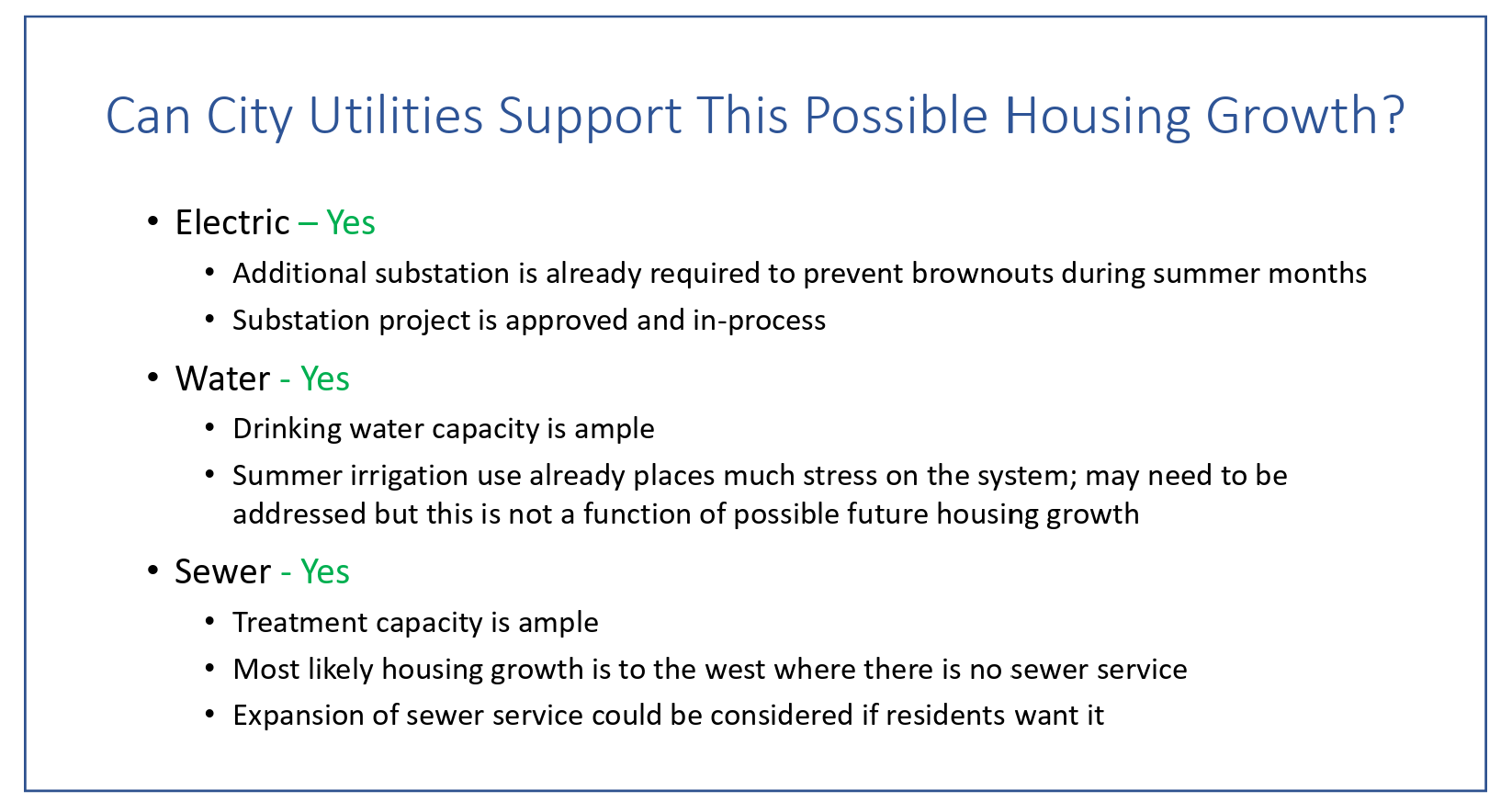
A year of facts has complicated that conclusion:
-
The city now faces a loan of $8 million-plus to upgrade the utility substation.
-
The sewer district needs several million dollars of unplanned spending to rebuild sewer pumps.
-
Excessive clear water in the sewer system is driving pressure to expand the sewer system further.
-
A December 2024 presentation from MPPC, the power cooperative that supplies Harbor Springs, warned that in the 2028 to 2030 period the regional grid lacks the reliability to assure trustworthy service.
So in March 2025 the Commission and Beckett & Raeder gave growth a green light. Within a year the town learned its water, sewer, and power systems all carry serious, partly unfunded constraints, and the first building approved under the rewritten code drew this much opposition. Are we getting this right? That is the question worth bringing to City Hall tonight.
Thanks to the commissioners, staff, and the consultant who put in the hours on a genuinely hard set of trade-offs. The point of showing up is not to attack the people doing the work. It is to make sure the decisions match what residents actually want for the town. The next regular meeting is scheduled for Thursday, July 16, 2026.